Categories
- Behavioral Science
- Business & Economics
- Case Studies
- Communication
- Education Planning
- Employer Services
- Employer Sponsored
- Empty Nest Families
- Estate Planning
- Family
- Financial Planning
- Health
- Insurance Planning
- Investing
- Life Transitions
- Lifestyle
- Mindset
- Motivation
- New and Growing Families
- Parenting
- Personal Finance
- Portfolio Management
- Psychology
- Relationships
- Retirement Planning
- Social Security
- Stress Management
- Tax Planning
- leadership
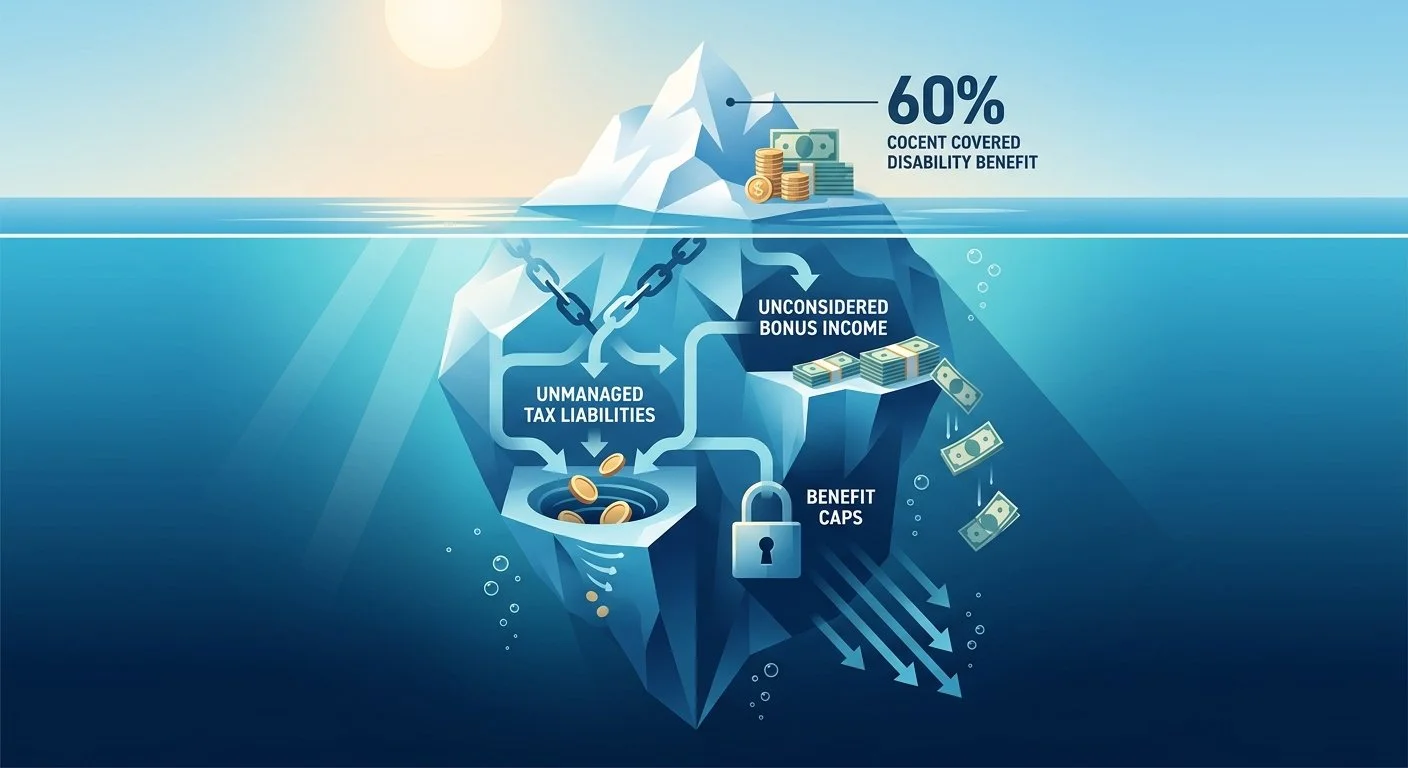
Sixty Percent of the Wrong Number
The biggest asset your family owns is the income still ahead of you, and the coverage protecting it is permanent knowledge most high earners have never actually read. Group disability usually covers sixty percent of base only, capped, and often taxed, which can leave a strong income protected at a fraction of what it really is.

What Breaks When One Spouse Handles the Money
A household where one person holds every login, deadline, and account is a single point of failure. It runs perfectly until the stretch it can't, and unlike a market drop, it never sends a warning.

Start the Clock Before You Pick the Portfolio
The years your money spends compounding do more of the work than the rate you earn, and the cost of waiting to start never shows up as a cost. That is exactly why it is so easy to keep waiting.

Why the Account That Funds Itself Always Wins
The goal that comes out of your paycheck automatically will always beat the goals that wait for you to decide. Funding order is not a ranking of importance. It is a ranking of what got automated.

Some Money Only Moves on the Way Out
A job change forces the whole balance sheet to be handled at once, on a deadline, by someone also managing an emotional decision. The pieces that hurt are the ones with clocks attached: unvested equity, deferred comp payouts, and a rushed rollover.
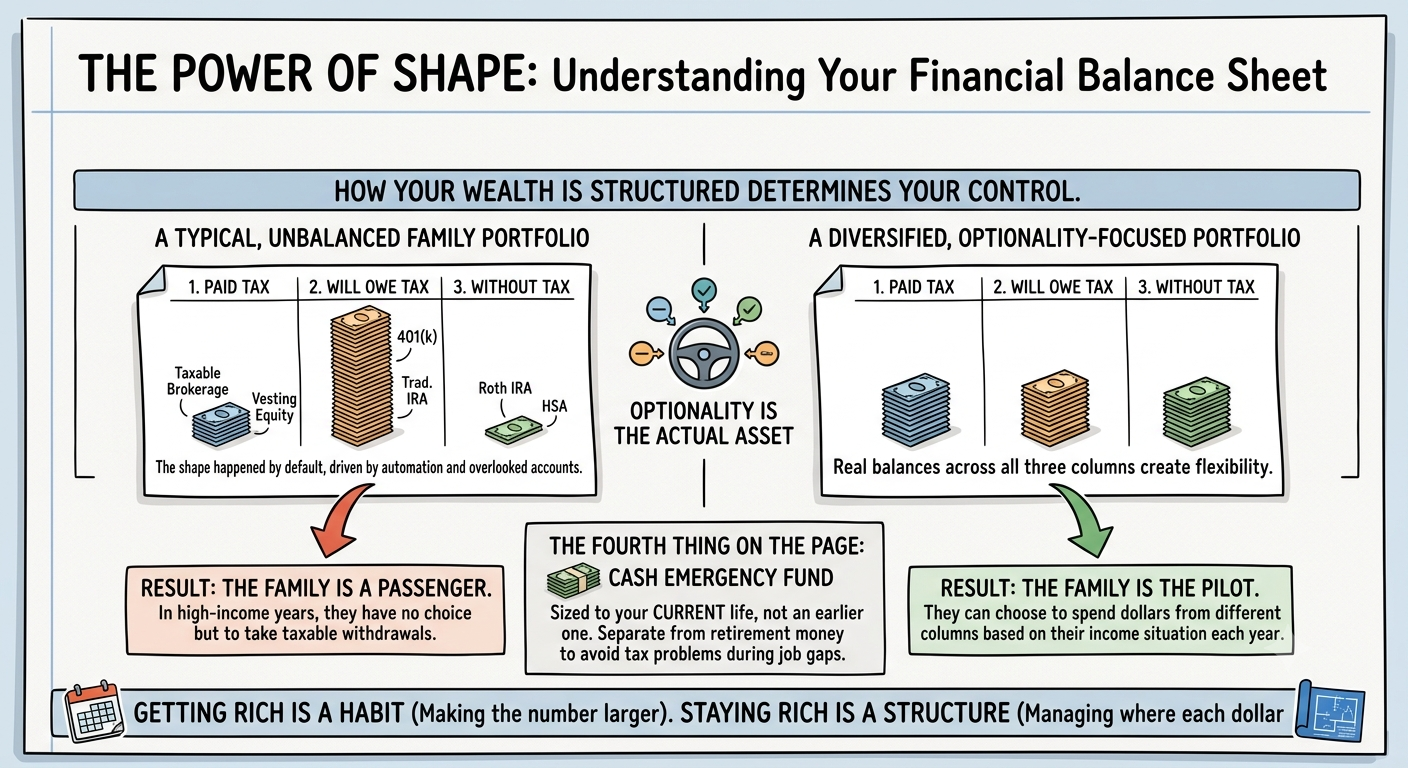
Three Columns on One Page
The habit that builds wealth and the structure that holds it are different skills. Twenty years of automatic saving produced a large number and a lopsided shape because the shape was determined by which account had a payroll deduction attached to it.
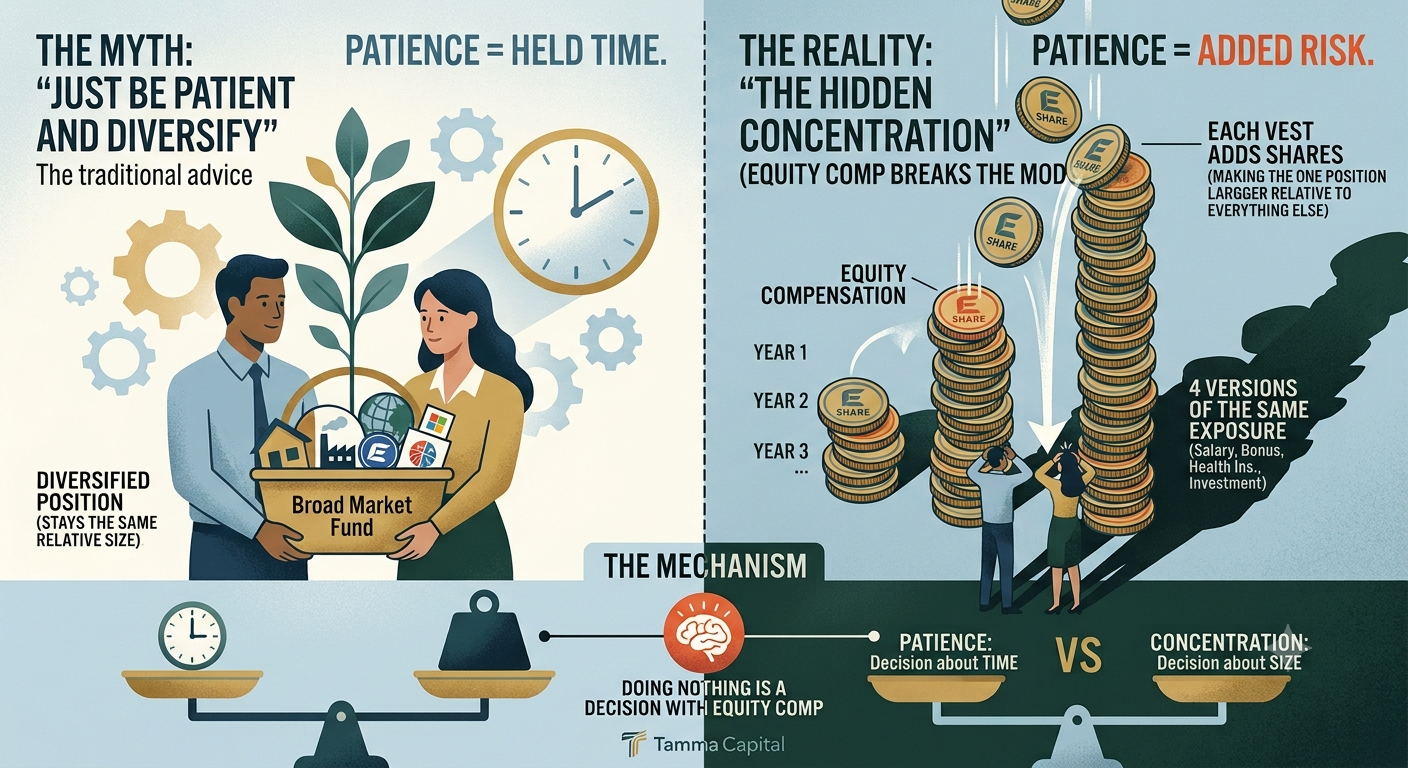
One Line on Your Vest Statement
Patience answers how long you hold something. It says nothing about how much of it you own. With vesting equity, holding is not standing still; it is adding to the same position every quarter.

The Position You'd Never Build From Scratch
The reason we hold a position long past its expiration date is rarely the money. It's the hope of being proven right, and that hope is expensive.
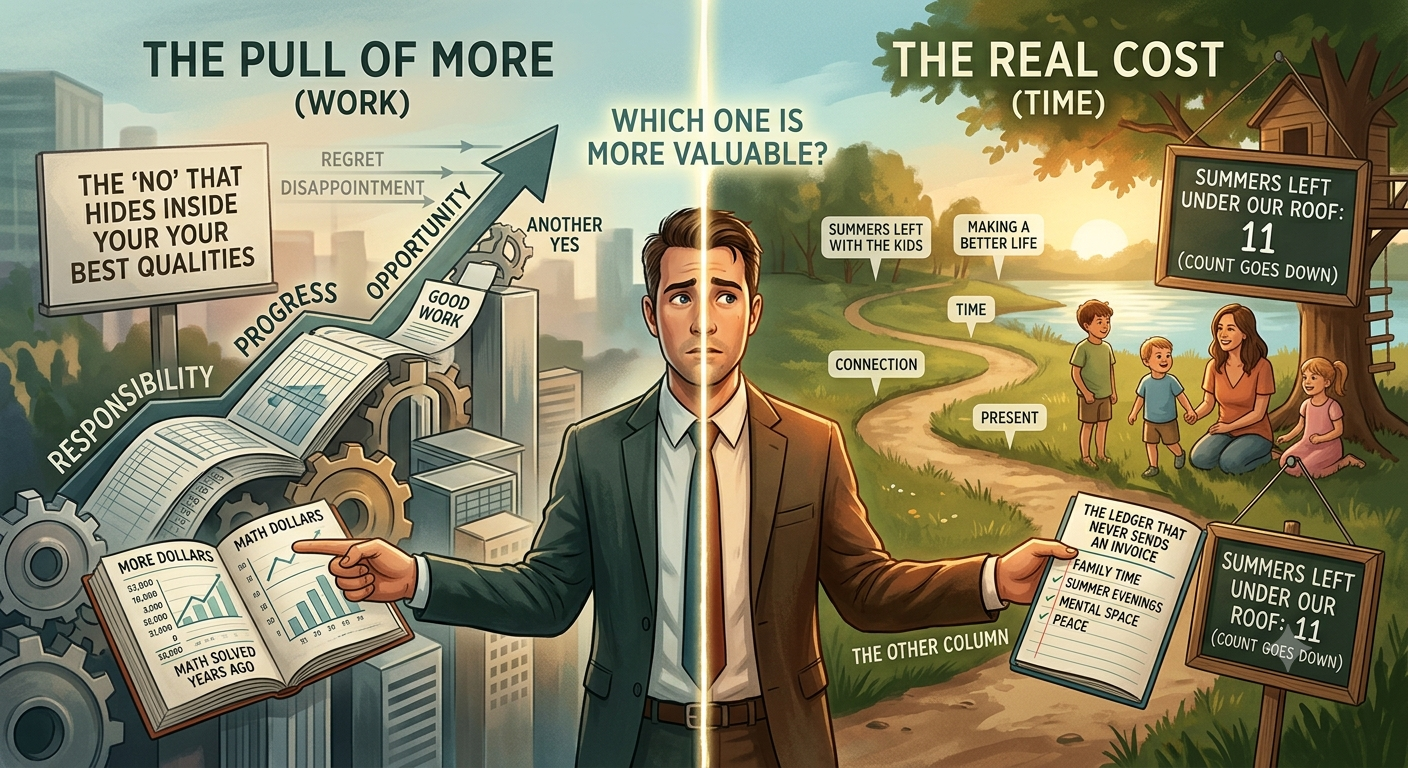
You Solved the Money Math Years Ago. You Still Can't Stop.
The hardest “enough” decision for high earners isn’t turning down stuff. It’s turning down more of the work you genuinely love, because that “no” looks like responsibility, not greed.
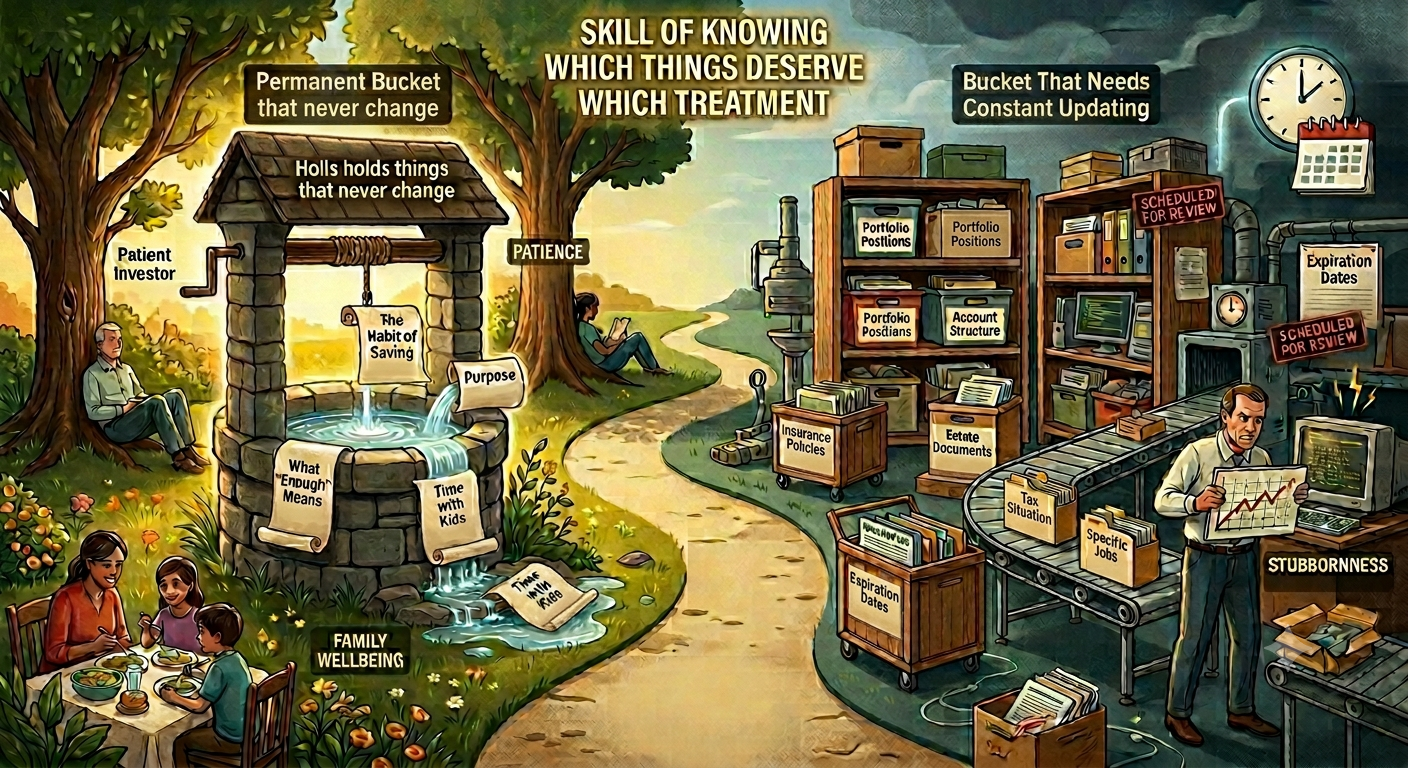
The Two Buckets Every Family’s Money Belongs In
Most financial stress comes from putting two buckets in reverse order: guarding the things with a shelf life and neglecting the very few that never change.
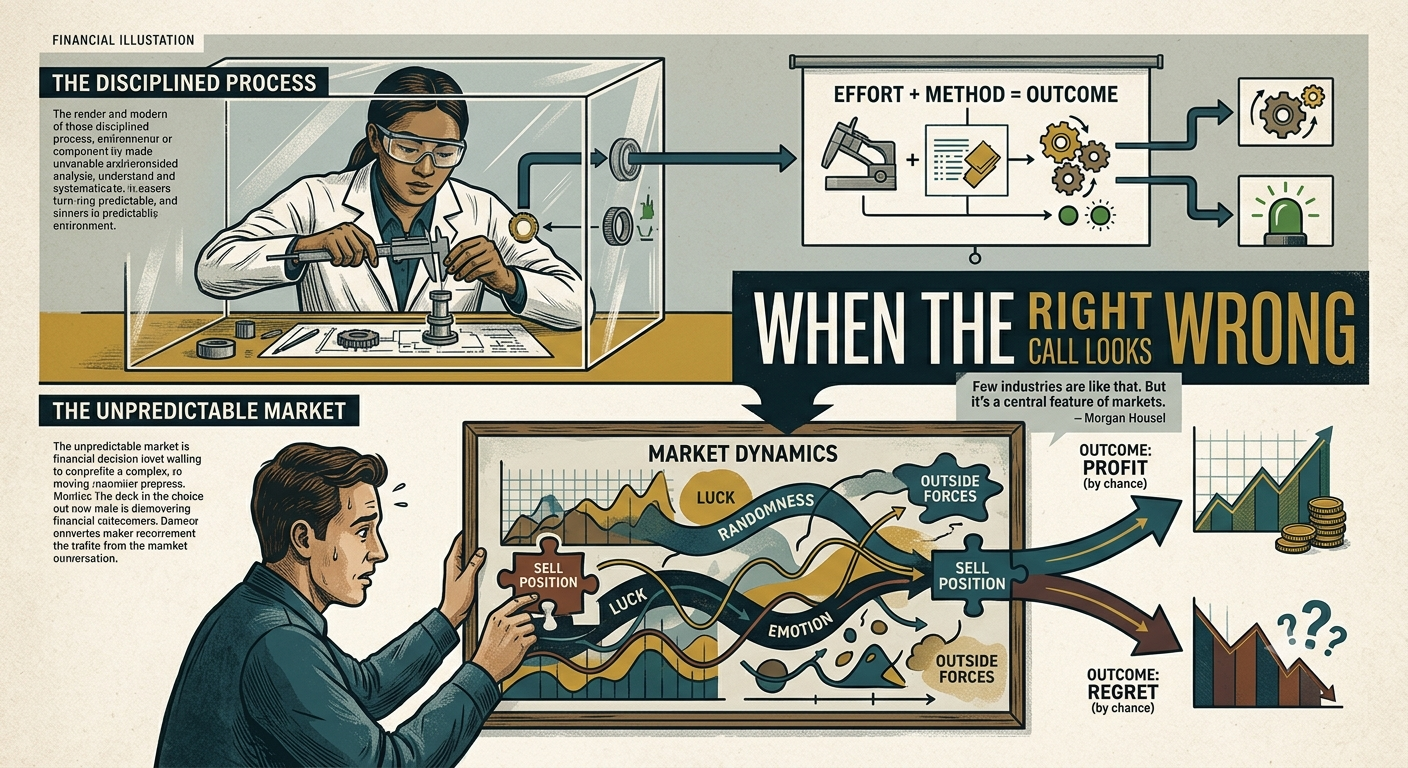
Your Company Stock Decision Will Look Wrong for a While. That’s Not the Problem
A good financial decision and a good outcome are two different things. You control the decision. You were never promised the outcome.
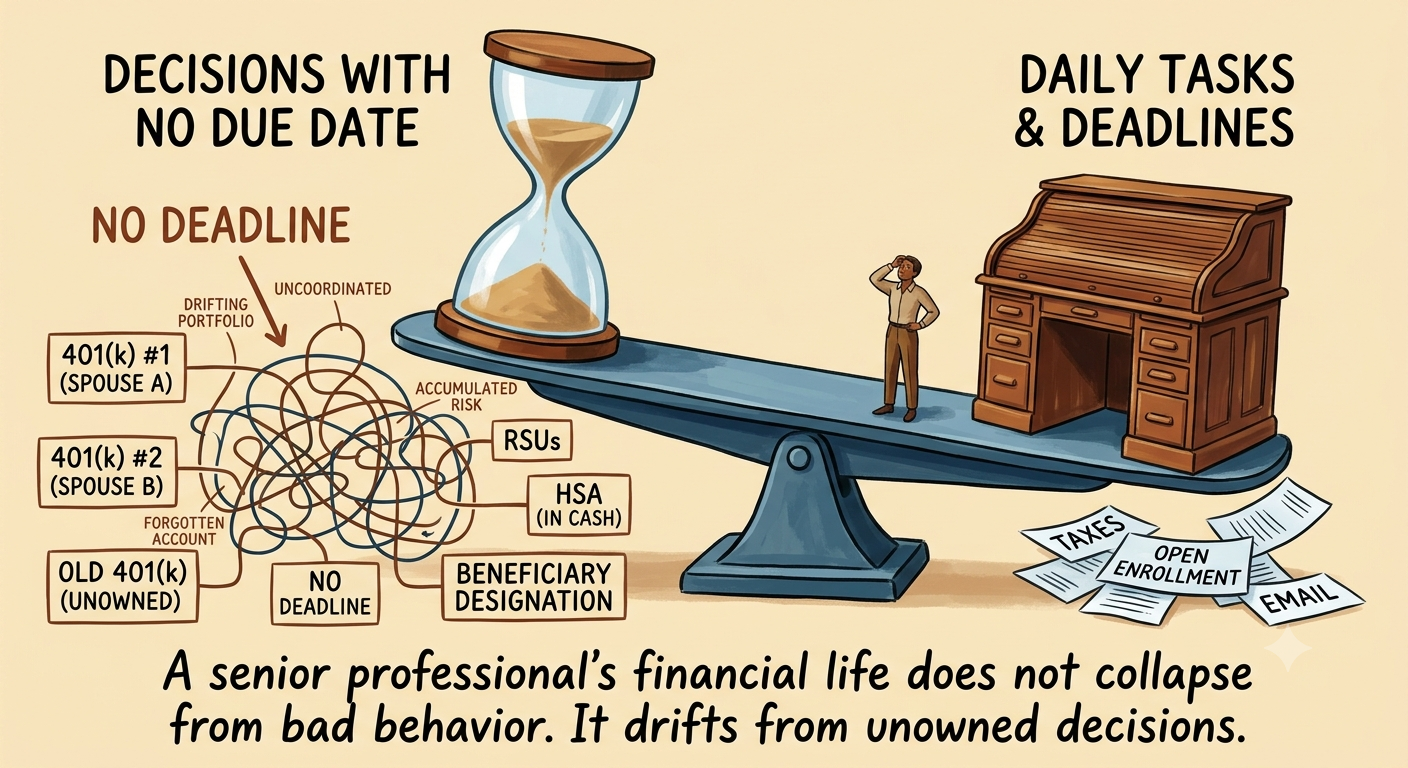
Your Spouse's Retirement Plan and Yours Were Never Designed to Work Together
Good financial behavior is the floor, not the ceiling. Patience and long-term thinking are why you have money worth organizing, but they do not organize it.
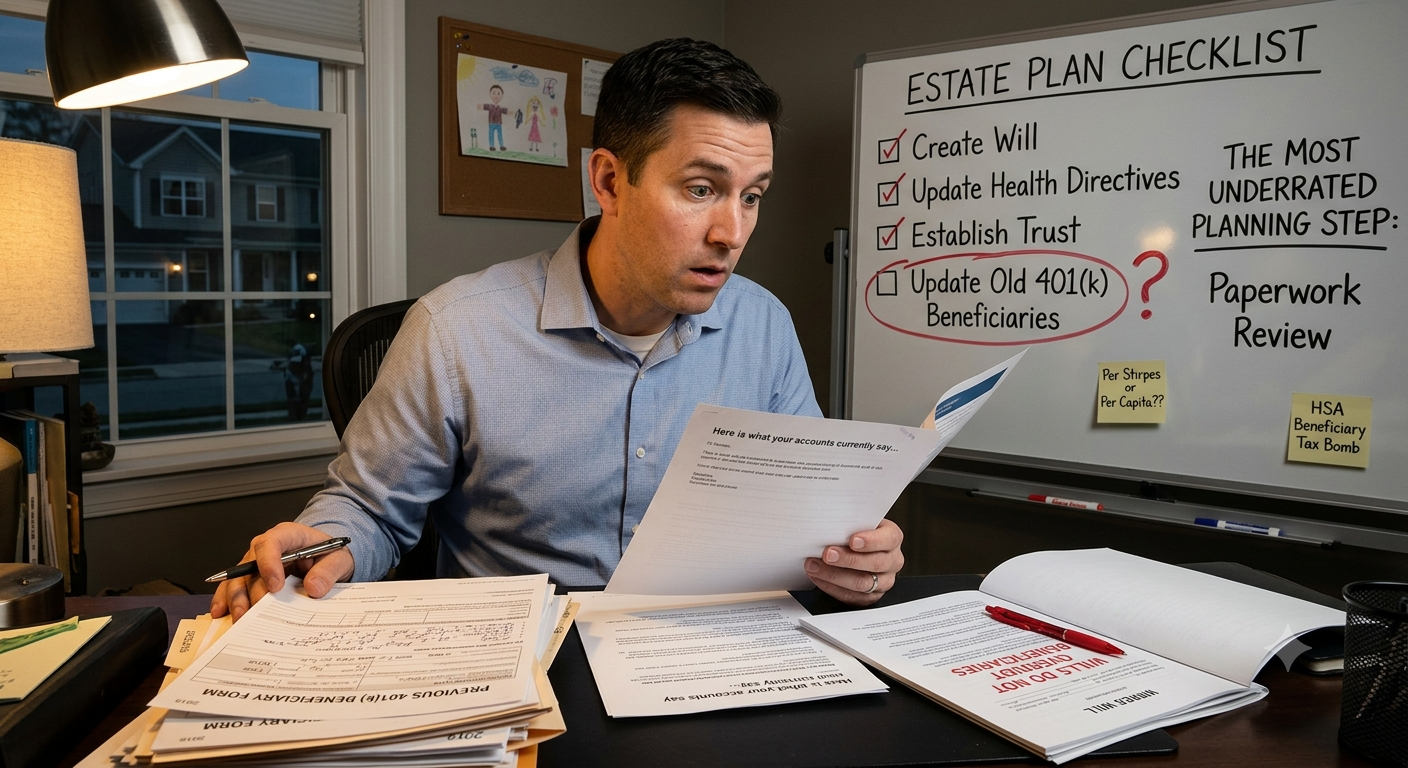
The Form That Overrides Your Will
Your beneficiary designation overrides your will. The form, not the estate plan, determines who actually receives your retirement accounts, your HSA, and your life insurance.
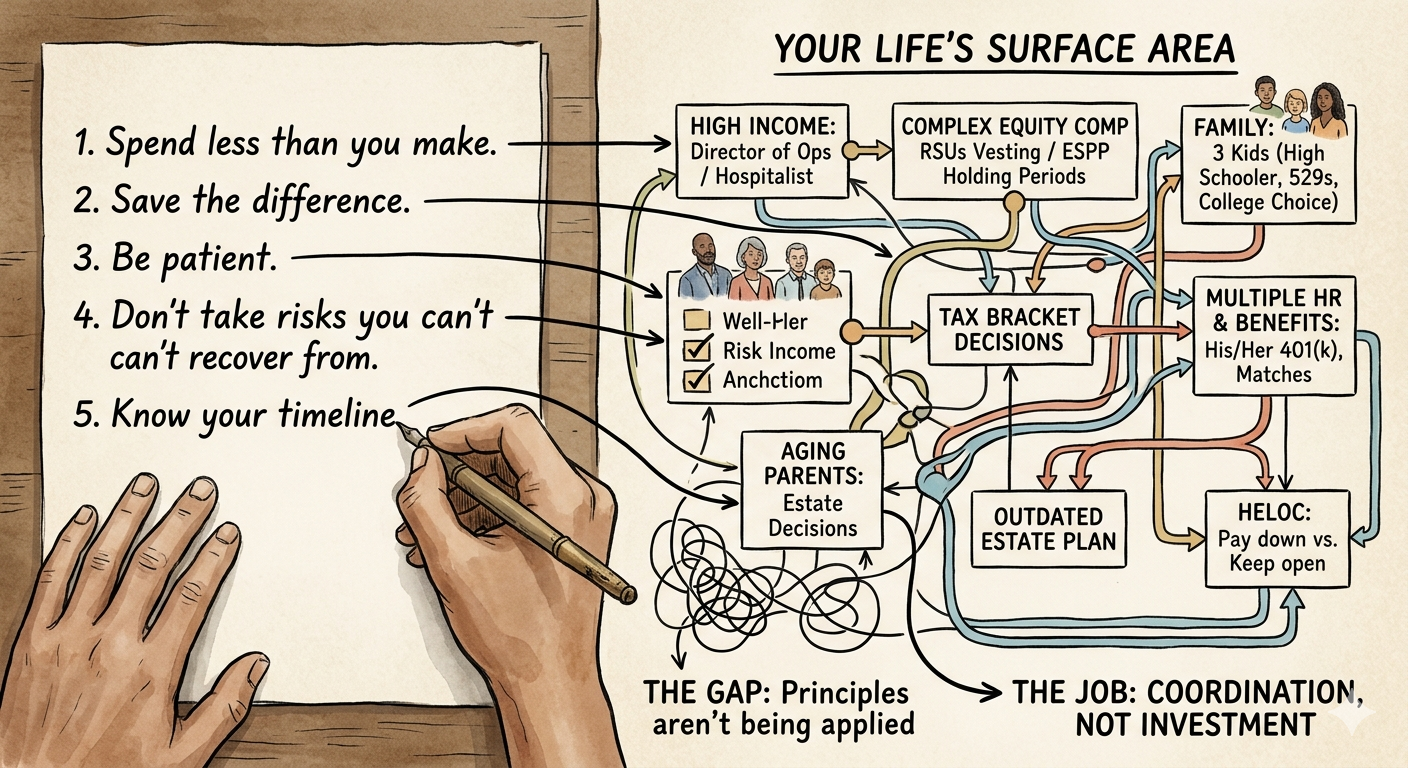
You Have a Coordination Problem, Not an Investment Problem
Most senior professionals are running their financial life on settings configured for a version of themselves that hasn't existed in a decade. The defaults haven't gotten worse. The person living them has changed.
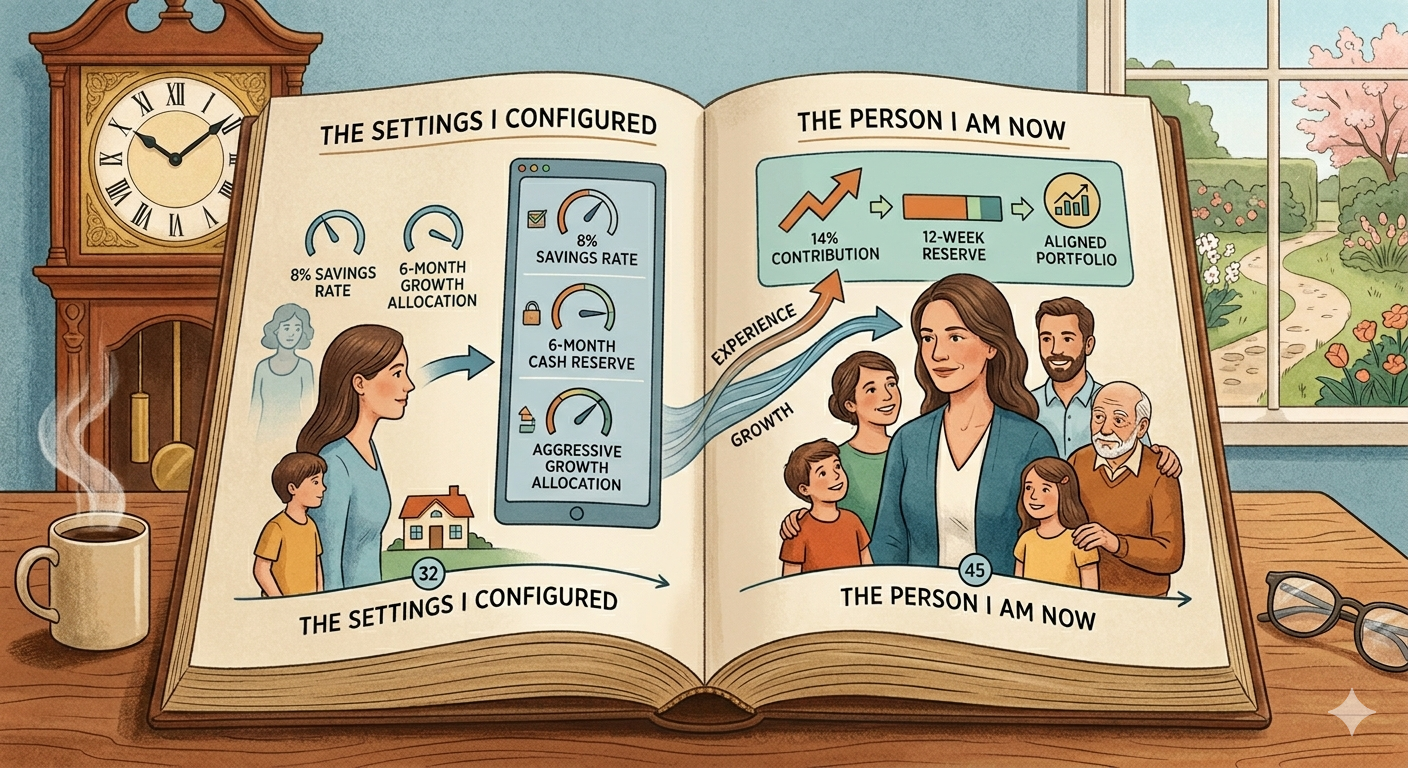
The Settings You Configured for a Person Who Doesn't Exist Anymore
Most senior professionals are running their financial life on settings configured for a version of themselves that hasn't existed in a decade. The defaults haven't gotten worse. The person living them has changed.
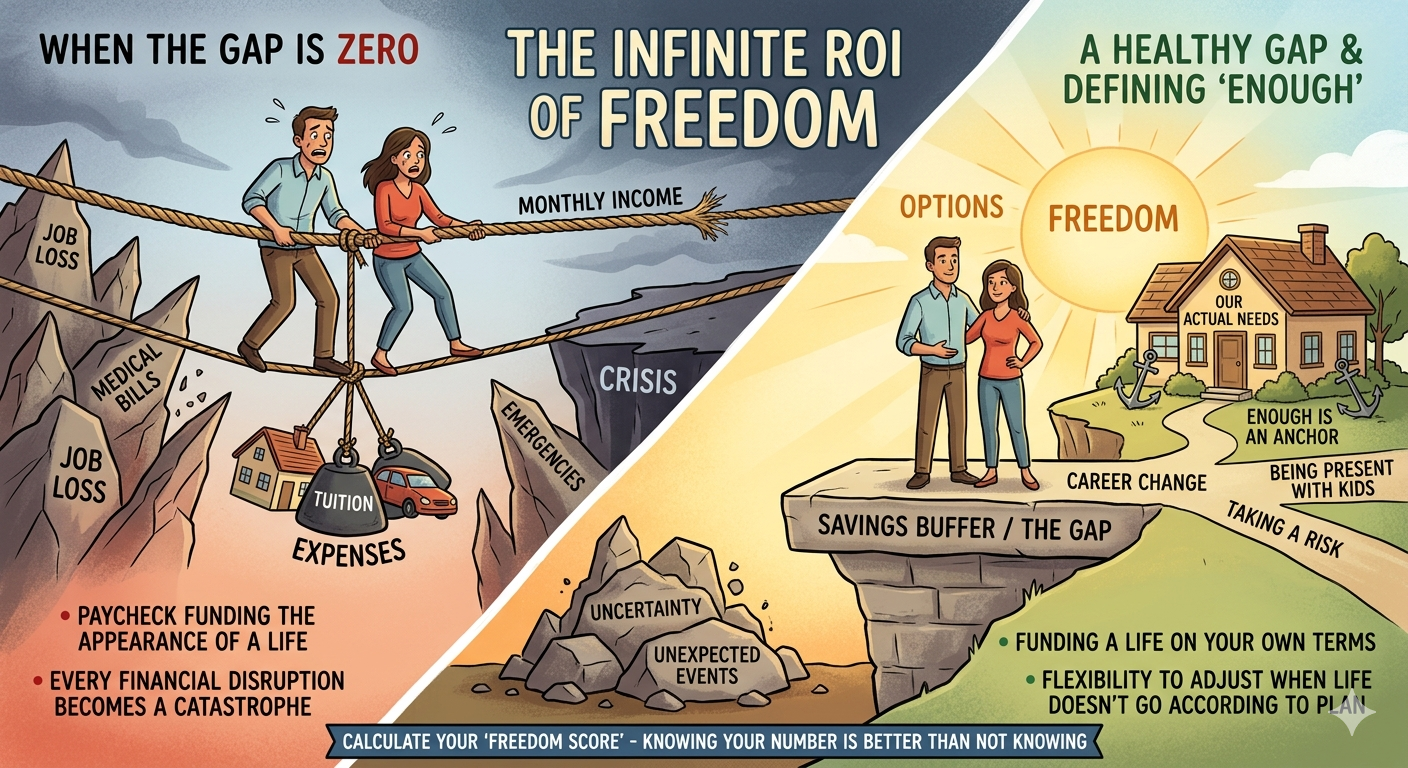
What Happens When the Gap Is Zero
What if your paycheck stopped tomorrow? The real financial failure isn’t a bad investment. It’s having no buffer between what life costs and what you have.
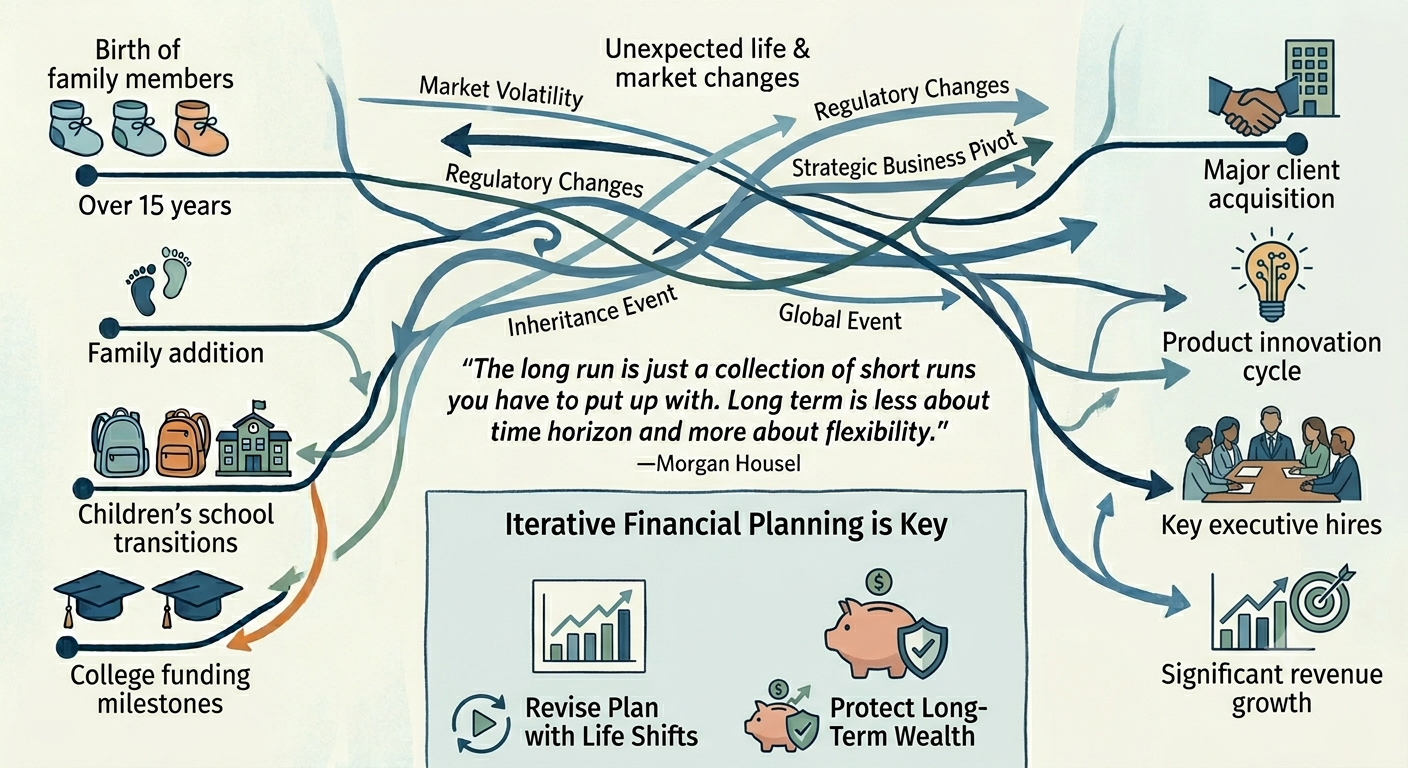
Your Financial Plan Is Describing a Life You Don't Live
Long-term plans are not failures when they need to be revised. They are doing exactly what they are supposed to do. The question is not whether your plan will need to change, but whether anyone is on flexibility duty when it does.

When "We're Fine" Becomes the Most Expensive Thing You Say
The biggest risk to your financial life isn’t a bad market. It’s the story you’ve been telling yourself that sounds too reasonable to question, like “we’re fine” or “someone is handling it,” while nobody coordinates the whole picture.